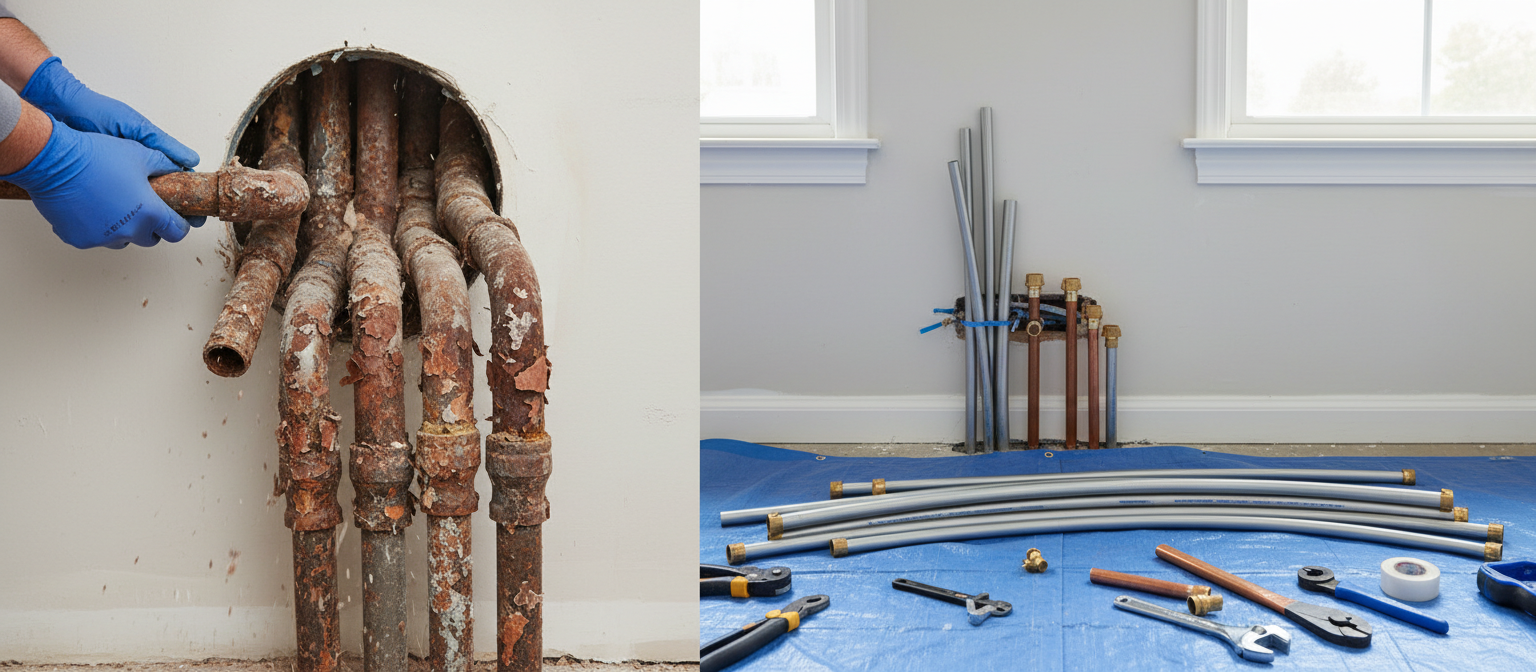
Galvanized Pipe Replacement in San Jose
Specialized service for pre-1960 homes with corroding galvanized steel pipes. Eliminate rust and restore water quality.
What Are Galvanized Pipes?
Galvanized pipes are steel water pipes coated with a layer of zinc to prevent corrosion. They were the standard plumbing material in American homes built from the 1920s through the late 1950s, and many San Jose homes from this era still rely on their original galvanized plumbing systems. While the zinc coating was designed to protect the steel underneath, decades of exposure to water and minerals inevitably break down this protective barrier.
When the zinc coating deteriorates, the exposed steel begins to corrode from the inside out. This corrosion process narrows the interior diameter of the pipes, reduces water flow, and introduces rust, sediment, and potentially harmful metals into your drinking water. For San Jose homeowners with pre-1960 construction, galvanized pipe replacement is not a matter of if but when.
Why Galvanized Pipes Fail
Galvanized steel pipes have an expected service life of 40 to 70 years depending on water chemistry, soil conditions, and usage patterns. Most galvanized pipes installed in San Jose homes during the 1930s through 1950s have now exceeded their maximum lifespan. The failure process follows a predictable pattern that worsens over time.
Stage 1: Zinc Layer Depletion
The protective zinc coating gradually dissolves through normal water contact. San Jose's mineral-rich water supply accelerates this process, particularly in areas served by groundwater wells. Once the zinc layer is compromised, bare steel is exposed to constant moisture.
Stage 2: Interior Corrosion and Buildup
Exposed steel reacts with water and dissolved minerals to form iron oxide (rust) deposits. These deposits accumulate along the pipe walls, progressively reducing the interior diameter. A pipe that originally measured three-quarters of an inch internally may be reduced to a quarter inch or less of usable flow area. This buildup is the primary cause of low water pressure in older San Jose homes.
Stage 3: Structural Weakness and Leaks
As corrosion penetrates deeper into the pipe walls, structural integrity declines. Pinhole leaks develop at weak points, often at threaded connections and joints where the zinc coating was thinnest. These leaks can cause significant water damage to walls, flooring, and foundations if not addressed promptly.
Health Risks of Corroded Galvanized Pipes
Beyond performance issues, corroded galvanized pipes pose measurable health concerns for your household. As the protective zinc layer breaks down, several contaminants can enter your water supply.
- Lead exposure: Many galvanized pipes were originally connected with lead-based solder, and some were manufactured with lead impurities in the zinc coating. As corrosion progresses, trapped lead particles are released into the water. Even low levels of lead exposure are harmful, particularly for children and pregnant women.
- Iron and rust: Visible rust particles cause discolored water ranging from yellow to dark brown. While iron is not toxic at typical levels, high concentrations affect taste, stain fixtures and laundry, and indicate advanced pipe deterioration.
- Cadmium: This heavy metal can be present in the zinc galvanizing layer and leaches into water as the coating deteriorates. Long-term cadmium exposure is associated with kidney damage and bone weakening.
- Bacterial growth: The rough, corroded interior surface of deteriorating galvanized pipes creates an ideal environment for biofilm formation and bacterial colonization that smooth modern pipe materials resist.
How to Identify Galvanized Pipes in Your Home
Determining whether your San Jose home has galvanized plumbing is straightforward with a few simple tests. Locate an exposed pipe section in your basement, crawl space, garage, or where the water main enters your home, and use the following identification methods.
- Magnet test: Galvanized steel is magnetic. Place a refrigerator magnet against the pipe. If it sticks firmly, the pipe is likely galvanized steel. Copper and plastic pipes are not magnetic.
- Scratch test: Use a flathead screwdriver or coin to scratch a small area of the pipe surface. Galvanized steel reveals a silvery-gray color beneath any surface oxidation. Copper shows a distinctive reddish or penny-colored metal.
- Visual inspection: Aged galvanized pipes typically have a dull gray appearance with rough, bumpy surface texture from mineral deposits. They may show white or greenish crystalline buildup at threaded joints.
- Construction date: If your San Jose home was built before 1960, there is a high probability it has galvanized plumbing, either partially or throughout the entire water supply system.
Galvanized Pipe Replacement Materials
When replacing galvanized pipes, San Jose homeowners have two primary modern piping materials to choose from. Each offers distinct advantages depending on budget, home configuration, and long-term priorities.
| Feature | PEX Piping | Copper Piping |
|---|---|---|
| Material Cost | $0.50 - $1.50 per foot | $2.00 - $5.00 per foot |
| Lifespan | 40-50 years | 50-70+ years |
| Freeze Resistance | Excellent (flexible) | Moderate |
| Installation Speed | Faster (fewer joints) | Slower (soldered joints) |
| Wall Access Needed | Minimal (flexible routing) | More openings required |
| Home Value Impact | Positive | Premium positive |
| Corrosion Resistance | Immune to corrosion | Highly resistant |
For most San Jose homeowners replacing galvanized pipes, PEX repiping offers the best combination of affordability, durability, and minimal disruption to your home. Copper repiping is the premium choice for those who prioritize maximum lifespan and resale value. Our licensed technicians can help you evaluate both options during your free consultation.
Our Galvanized Pipe Replacement Process
Our systematic approach to galvanized pipe replacement ensures thorough removal of all corroded piping with minimal disruption to your daily life. Every project follows these proven steps.
- Comprehensive inspection: A licensed technician examines all accessible plumbing, tests water pressure at multiple fixtures, evaluates pipe condition, and documents the full scope of galvanized piping in your home.
- Detailed proposal: You receive a written estimate covering material options, labor, permits, wall repair, and timeline. We explain every cost so there are no surprises.
- Permit acquisition: We handle all City of San Jose building permit applications and fees as part of our service. Proper permits ensure the work meets local plumbing codes and passes inspection.
- Selective access openings: Our crew creates strategic wall openings to access pipe runs. With PEX, these openings are smaller and fewer compared to rigid pipe materials.
- Old pipe removal: All galvanized piping is carefully removed from the walls, floors, and crawl spaces. We take care to avoid disturbing insulation, electrical wiring, and structural elements.
- New pipe installation: Your chosen piping material is installed according to California Plumbing Code standards. Every connection is secured and routed for optimal water pressure distribution.
- Pressure testing: The entire new system is pressurized and tested for leaks before connecting to fixtures. This step confirms every joint and connection is watertight.
- City inspection: A San Jose building inspector verifies all work meets code requirements and approves the installation.
- Wall repair and cleanup: We patch all wall openings, texture-match the surface, paint to blend with existing finishes, and leave your home clean and restored.
- Warranty registration: Your lifetime warranty is registered, covering both materials and workmanship for complete peace of mind.
Cost of Galvanized Pipe Replacement in San Jose
The investment required for galvanized pipe replacement varies based on several factors specific to your home. Below are typical price ranges for San Jose residential projects.
- Small home (1-2 bathrooms): $8,000 to $12,000 with PEX, $12,000 to $16,000 with copper
- Medium home (2-3 bathrooms): $10,000 to $16,000 with PEX, $15,000 to $22,000 with copper
- Large home (3+ bathrooms): $14,000 to $20,000 with PEX, $20,000 to $30,000 with copper
These ranges include permits, wall repair, painting, and cleanup. For an accurate estimate tailored to your home, use our free cost calculator or schedule a free in-home inspection. We also offer financing options to make this essential upgrade accessible for every San Jose homeowner.
Benefits of Galvanized Pipe Replacement
Restore your home's plumbing system with lasting results
Clean, Clear Water
Eliminate rust, discoloration, and metallic taste from your drinking water. New pipes deliver fresh, clean water from every faucet in your home.
Full Water Pressure Restored
Corroded galvanized pipes can restrict water flow by up to 75%. Modern replacement pipes restore full pressure to showers, faucets, and appliances.
Increased Home Value
Updated plumbing is a significant selling point in the San Jose real estate market. Buyers and inspectors specifically look for galvanized pipe replacement.
Galvanized Pipe Replacement Questions
How do I know if my San Jose home has galvanized pipes?
How much does galvanized pipe replacement cost in San Jose?
Is it safe to drink water from galvanized pipes?
Can galvanized pipes be replaced in sections, or do I need full replacement?
How long does galvanized pipe replacement take?
What material should I use to replace galvanized pipes?
Other Repiping Services
Explore our full range of pipe replacement solutions
Whole House Repiping
Complete replacement of all water supply lines. Ideal for homes with aging or corroded pipes throughout the system.
Learn MoreLead Pipe Replacement
Safe removal of hazardous lead pipes. Protect your family's health with modern, lead-free plumbing materials.
Learn MorePEX Repiping
Most cost-effective option with flexible installation. Freeze-resistant and 25-40% less than copper repiping.
Learn MoreReady to Replace Your Galvanized Pipes?
Contact us today for a free inspection and estimate. Our licensed technicians specialize in galvanized pipe replacement throughout San Jose and the South Bay.