Your water heater is one of the hardest-working appliances in your home, and when it fails, you feel it immediately. Whether you are dealing with a unit that is on its last legs or you are building a new home, getting a San Jose water heater installation quote can feel overwhelming with so many options on the market. As licensed plumbers who install water heaters across the South Bay every week, we have put together this guide to help you make an informed decision without the sales pressure.
Tank vs. Tankless Water Heaters: Which Is Right for Your Home?
This is the first and biggest decision you will make. Both types have clear advantages, and the right choice depends on your household size, hot water usage patterns, and budget. Here is an honest breakdown:
| Factor | Tank Water Heater | Tankless Water Heater |
|---|---|---|
| Unit Cost | $600 - $1,500 | $1,000 - $2,500 |
| Installation Cost | $600 - $1,200 | $1,200 - $2,000 |
| Total Installed Cost | $1,200 - $2,700 | $2,200 - $4,500 |
| Lifespan | 8 - 12 years | 15 - 20+ years |
| Energy Efficiency | Moderate (standby heat loss) | High (heats on demand only) |
| Annual Energy Cost | $350 - $550 | $200 - $400 |
| Hot Water Supply | Limited by tank size (can run out) | Unlimited (continuous heating) |
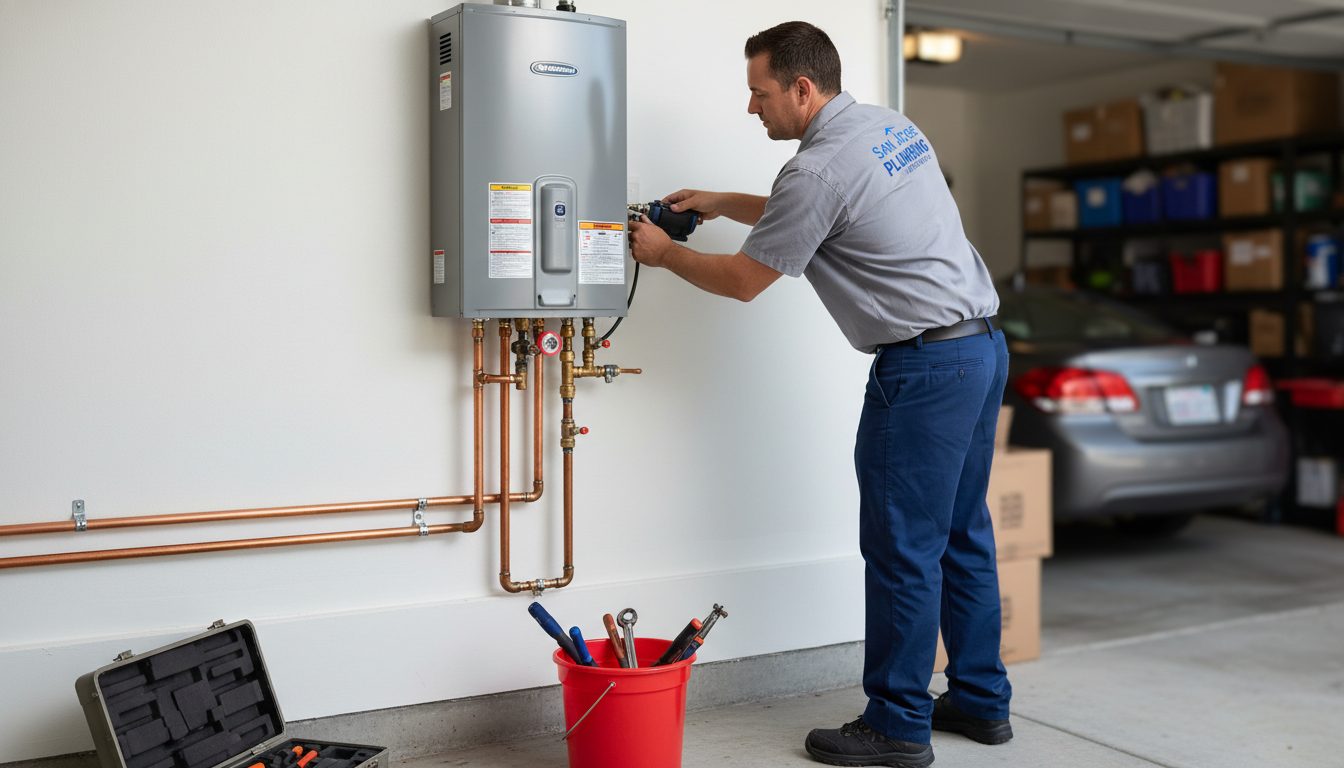
| Space Required | Large (floor space for tank) | Small (wall-mounted) |
| Maintenance | Annual flush recommended | Annual descaling required |
| Best For | Budget-conscious, 1-3 person homes | Larger families, high usage, long-term savings |
One thing we tell every homeowner: tankless is not automatically better. If you are a couple in a small home who rarely runs multiple hot water fixtures at once, a quality tank water heater is perfectly adequate and saves you $1,000+ upfront. On the other hand, if you have a family of five and someone is always running out of hot water, tankless is a game-changer.
Gas vs. Electric: What Works Best in San Jose?
San Jose homes typically have access to PG&E natural gas, which gives you the choice between gas and electric water heaters. Here is what you should know:
Gas water heaters (both tank and tankless) heat water faster and cost less to operate in most cases, since natural gas is cheaper than electricity in the Bay Area. A gas tank heater recovers hot water roughly twice as fast as an electric model of the same size. Gas tankless units can deliver higher flow rates than their electric counterparts, making them better for homes with multiple bathrooms.
Electric water heaters are simpler to install (no gas line or venting needed), have lower upfront costs, and produce zero direct emissions. With California's push toward electrification and the growing popularity of heat pump water heaters, electric options are becoming increasingly attractive. Heat pump water heaters are 2-3 times more efficient than standard electric resistance models, and they qualify for significant rebates.
If your home does not currently have a gas line running to the water heater location, installing one adds $500-$1,500 to the project. In that case, an electric or heat pump unit may make more financial sense. Conversely, if you already have gas plumbing in place, sticking with gas is usually the path of least resistance and expense. When upgrading your water heater, it is also a good time to evaluate your home's supply piping. Older galvanized pipes can restrict flow to new fixtures. A copper repiping or PEX repiping ensures your new water heater delivers its full performance.
Sizing Your Water Heater Correctly
An undersized water heater means cold showers. An oversized one wastes energy and money. Getting the size right is essential.
For tank water heaters, sizing is based on first-hour rating (FHR), which measures how many gallons of hot water the unit can deliver in the first hour of use. General guidelines:
- 1-2 people: 30-40 gallon tank
- 2-3 people: 40-50 gallon tank
- 3-4 people: 50-60 gallon tank
- 5+ people: 60-80 gallon tank or consider tankless
For tankless water heaters, sizing is based on flow rate (gallons per minute) and temperature rise. In San Jose, incoming groundwater temperature averages around 57-62 degrees Fahrenheit. To deliver 120-degree water, you need a temperature rise of about 60 degrees. Most residential tankless units deliver 5-8 GPM at this rise, which can handle 2-3 simultaneous fixtures.
We always perform a usage assessment before recommending a specific unit. The right water heater for a 1,200 sq ft bungalow in Naglee Park is very different from what a 3,500 sq ft home in Silver Creek needs. Use our cost calculator for a preliminary estimate, then schedule an in-home assessment for a precise recommendation.
Energy Efficiency and San Jose Rebates
Water heating accounts for roughly 18-20% of the average San Jose home's energy bill. Choosing a high-efficiency unit pays for itself over time, and local rebates can reduce your upfront cost significantly.
Current rebates and incentives available to San Jose homeowners in 2026:
- Federal tax credit: Up to $2,000 for qualifying heat pump water heaters under the Inflation Reduction Act (IRA). This is a dollar-for-dollar tax credit, not just a deduction.
- BayREN rebates: The Bay Area Regional Energy Network offers rebates of $1,000-$2,500 for heat pump water heaters for qualifying Bay Area homeowners.
- PG&E rebates: PG&E periodically offers rebates on ENERGY STAR-rated water heaters. Check their website or ask us for current availability.
- San Jose Clean Energy: As a San Jose Clean Energy customer, you may qualify for additional incentives when switching from gas to electric or heat pump water heating.
When you stack federal, regional, and utility rebates, a high-efficiency heat pump water heater that costs $3,500 installed might have a net cost of $1,500 or less. We help our customers navigate the rebate process and provide the documentation needed to claim every dollar available.
San Jose Permits and Code Requirements
Water heater installation in San Jose requires a plumbing permit from the City of San Jose Building Division. This is not optional and not just a formality. Here is what you need to know:
- A plumbing permit is required for any water heater replacement or new installation
- If you are switching from gas to electric (or vice versa), you may also need an electrical or mechanical permit
- The work must be performed by a licensed plumber (C-36 license) or a licensed general contractor with a plumbing specialty
- An inspection by a City of San Jose inspector is required after installation
- California now requires an expansion tank on all new water heater installations where a pressure-reducing valve or backflow preventer is present
- Seismic strapping is required on all water heaters in California (two straps: one in the upper third, one in the lower third)
- A drip pan with a drain line is required if the water heater is installed in a location where leakage could cause damage
Unpermitted water heater installations can create problems when you sell your home. Inspectors flag unpermitted work, and buyers use it as negotiation leverage. Our team pulls all necessary permits and coordinates the inspection, so you have complete documentation for your records.
The Installation Process: What to Expect
When you hire San Jose Pro Plumbing for a water heater installation, here is the typical process from start to finish:
- In-home assessment (free): We evaluate your current setup, assess your hot water needs, inspect your plumbing connections, and discuss your preferences and budget. This takes about 30 minutes.
- Detailed quote: You receive a written quote that includes the unit, all materials, labor, permit fees, and haul-away of the old unit. No hidden fees, no surprise charges.
- Scheduling: We schedule the installation at a time that works for you. For emergency replacements (your old unit failed), we often offer same-day or next-day service.
- Permit: We pull the required plumbing permit from the City of San Jose before starting work.
- Installation day: For a standard tank-to-tank replacement, plan on 2-4 hours. Tank-to-tankless conversions take 4-8 hours due to additional gas line, venting, and electrical work. We protect your floors and clean up completely.
- Testing and walkthrough: We test the unit, check all connections for leaks, verify proper venting (gas units), and walk you through the controls and maintenance schedule.
- Inspection: We schedule the city inspection and meet the inspector on your behalf when possible.
- Old unit disposal: We haul away and properly recycle your old water heater at no extra charge.
Signs It Is Time to Replace Your Water Heater
Water heaters do not last forever. Here are the telltale signs that replacement is smarter than repair:
- Age: Tank water heaters over 10-12 years old are living on borrowed time. Check the serial number on the manufacturer's label to determine the year of manufacture.
- Rusty water: Rusty hot water (but clear cold water) indicates corrosion inside the tank. Once the tank itself is corroding, replacement is the only solution.
- Leaking from the tank: A leak from the tank body (not a fitting or valve) means the tank has failed. This is an emergency since a full rupture can flood your home.
- Inconsistent temperature: If your water swings between hot and cold unpredictably, the heating element or thermostat is failing.
- Strange noises: Rumbling, popping, or banging sounds indicate sediment buildup that has hardened on the bottom of the tank, reducing efficiency and accelerating tank failure.
- Increasing energy bills: A water heater that is losing efficiency will work harder and cost more to operate.
- Frequent repairs: If you have called a plumber for water heater repairs more than twice in the past year, the cost of continued repairs likely exceeds the value of installing a new unit.
If your water heater is showing these signs, do not wait for a catastrophic failure. A controlled replacement on your schedule is far less stressful and expensive than an emergency replacement after a flood. A leaking water heater can also contribute to hidden damage similar to a slab leak, so addressing it promptly protects your home's foundation and structure. Ready to get started? Contact us for a free estimate and we will help you choose the right water heater for your San Jose home.