A slab leak is one of the most serious plumbing problems a San Jose homeowner can face. Because the leak is hidden beneath your concrete foundation, it can go undetected for weeks or months -- silently causing water damage, mold growth, and structural issues. As plumbers who handle slab leak detection in San Jose every week, we have seen firsthand how early detection saves homeowners thousands of dollars and months of headaches.
What Is a Slab Leak?
A slab leak occurs when a water supply line or drain pipe running beneath your home's concrete slab foundation develops a crack, hole, or joint failure. Water escapes from the pipe and saturates the soil and concrete around it. In San Jose, where most homes built from the 1950s through the 1980s sit on concrete slab foundations, this is an unfortunately common problem.
The pipes beneath your slab are typically copper supply lines and cast iron or ABS drain lines. Over decades, these materials can degrade due to corrosion (especially copper in contact with San Jose's slightly alkaline water and expansive clay soils), soil shifting, poor original installation, or simple age. Homes with galvanized pipes are at even higher risk, as galvanized steel is especially vulnerable to internal corrosion.
Warning Signs of a Slab Leak
Slab leaks are hidden by design, but they almost always produce visible or measurable symptoms. Here are the eight most common warning signs we tell San Jose homeowners to watch for:
- Unexplained spike in your water bill. If your water usage has not changed but your bill suddenly jumps by $50, $100, or more, a hidden leak is the most likely culprit. Even a small slab leak can waste hundreds of gallons per day.
- Sound of running water when nothing is on. If you hear water flowing through pipes when every fixture in the house is off, there is water going somewhere it should not.
- Hot spots on the floor. If a hot water line under the slab is leaking, you may notice warm or hot areas on your tile, hardwood, or carpet. Walk around barefoot and pay attention to temperature changes.
- Damp or warped flooring. Moisture seeping up through the slab can cause carpet to feel damp, hardwood to buckle, and tile grout to darken or crack.
- Cracks in walls or foundation. As water saturates the soil beneath your slab, it can cause differential settling that produces cracks in interior walls, exterior stucco, or the slab itself.
- Mold or mildew smell. Persistent musty odors, especially near the floor, can indicate moisture accumulating beneath or within your slab.
- Low water pressure. A significant leak in a supply line reduces the pressure available to your fixtures. If your shower pressure has gradually weakened, a slab leak could be the cause.
- Water meter running constantly. Turn off every water-using appliance and fixture in your home, then check your water meter. If the dial is still moving, you have a leak somewhere in the system.
If you are experiencing two or more of these symptoms, we strongly recommend scheduling a professional slab leak detection as soon as possible. The longer a slab leak goes unaddressed, the more expensive the repair becomes.
How Professional Slab Leak Detection Works
Modern slab leak detection is non-invasive and highly accurate. Here are the primary methods we use at San Jose Pro Plumbing:
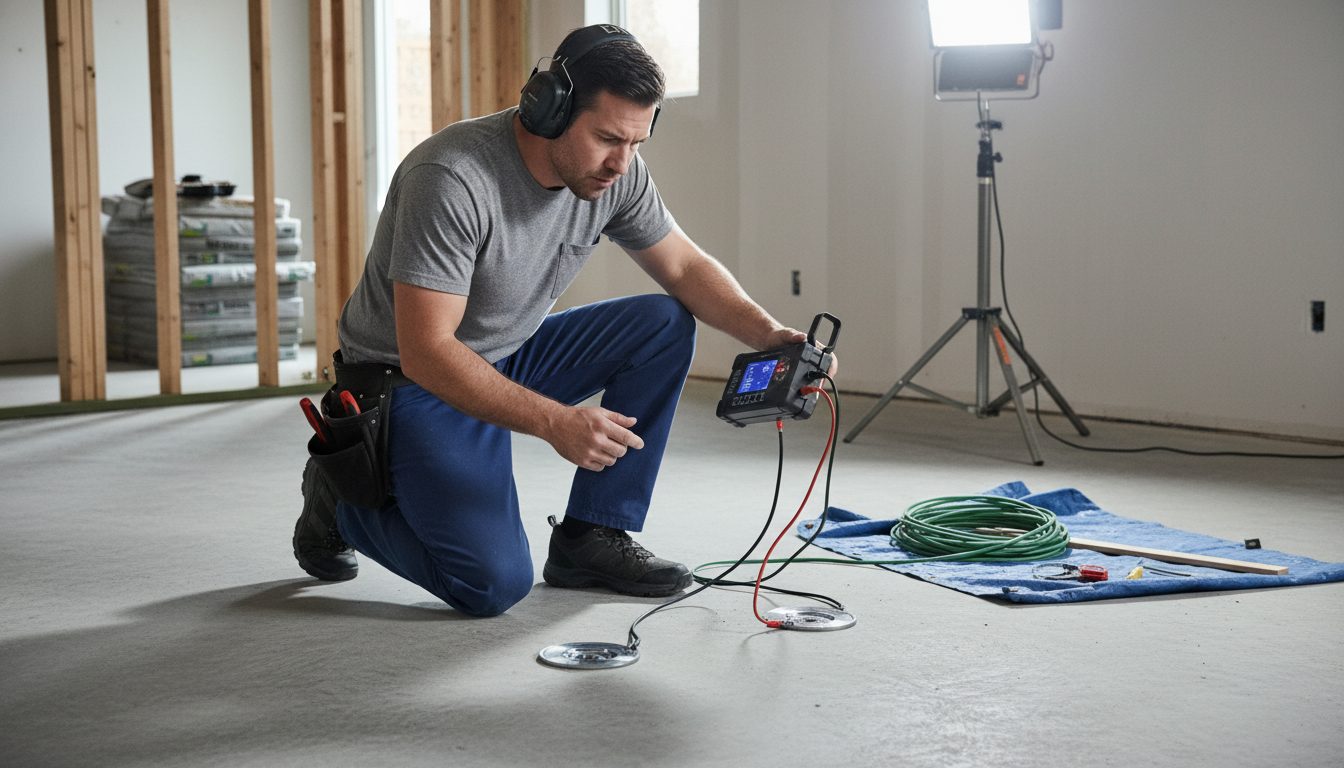
- Electronic listening devices. Specialized ground microphones and acoustic sensors amplify the sound of water escaping from a pipe, even through several inches of concrete. This is the most commonly used method and is effective for pressurized supply lines.
- Electromagnetic pipe locators. These devices send a signal through the pipe to map its exact path beneath the slab. Knowing exactly where your pipes run allows us to pinpoint the leak location within inches.
- Thermal imaging cameras. Infrared cameras detect temperature differences on the floor surface. A hot water leak creates a distinct warm signature, and even cold water leaks can be identified by the thermal contrast with surrounding dry concrete.
- Pressure testing. We isolate sections of your plumbing system and test for pressure drops, which confirms the presence and approximate location of a leak.
- Video camera inspection. For drain line slab leaks, we insert a waterproof camera to visually inspect the interior of the pipe and identify cracks, offsets, or breaks.
Professional slab leak detection in San Jose typically costs between $200 and $500, depending on the complexity of the system and the number of methods required. While that may seem like an added expense, accurate detection saves you money by pinpointing the exact repair location rather than guessing and jackhammering in the wrong spot.
Slab Leak Repair Options and Costs
Once the leak is located, you have several repair options. The right choice depends on the leak's location, the pipe material and condition, the number of leaks, and whether you plan to stay in the home long-term.
| Repair Method | Cost Range | Disruption Level | Longevity | Best For |
|---|---|---|---|---|
| Spot Repair | $2,000 - $3,500 | Moderate -- requires jackhammering a small section of slab | 5-15 years (depends on overall pipe condition) | Single leak in otherwise healthy pipes |
| Pipe Reroute | $2,500 - $5,000 | Low to moderate -- new pipe goes through walls/ceiling, not slab | 20-50 years (new pipe) | Leak in hard-to-reach location, or pipe section with multiple weak points |
| Full Repipe | $4,000 - $6,000+ | Moderate to high -- whole-house project over 1-3 days | 25-50+ years | Aging pipe system with multiple leaks or high risk of future leaks |
Spot repair is the most affordable option and makes sense when you have a single, isolated leak in pipes that are otherwise in good condition. The plumber jackhammers through the slab at the leak location, cuts out the damaged section, and replaces it with new pipe. The concrete is then patched.
Pipe rerouting abandons the leaking under-slab pipe and runs a new line through the walls, attic, or ceiling to bypass the slab entirely. This is often the smarter choice when the leak is in a difficult location or the under-slab pipe section is deteriorating. The abandoned pipe is capped off and left in place.
Full repiping replaces all the water supply lines in the home, routing them above the slab through walls and ceilings. This is the most comprehensive and long-lasting solution, especially for homes with older copper or polybutylene pipes that are prone to multiple failures. A whole house repipe with modern PEX piping eliminates the risk of future slab leaks entirely, since all supply lines are moved above the foundation. Use our repiping cost calculator to get a personalized estimate.
San Jose Soil and Foundation Considerations
San Jose's geology plays a significant role in slab leak frequency. Much of the Santa Clara Valley sits on expansive clay soils that swell when wet and shrink when dry. This seasonal soil movement -- common in neighborhoods throughout South San Jose, Evergreen, and the Almaden Valley -- creates stress on under-slab pipes that can lead to joint separation and cracks over time.
Additionally, San Jose experienced significant growth during the 1950s through 1970s, when copper supply lines were standard for under-slab installation. Many of these pipes are now 50 to 70 years old and reaching the end of their expected lifespan. Copper pipes in contact with the alkaline soils common in our area are particularly susceptible to pitting corrosion from the outside in, which is why we see so many slab leaks in homes from this era.
Homes near the Guadalupe River corridor and Coyote Creek also face higher water table levels, which can accelerate corrosion and make leak detection more challenging due to existing ground moisture.
Does Homeowner's Insurance Cover Slab Leaks?
This is one of the first questions homeowners ask, and the answer is: it depends on your policy and the cause of the leak. Here is the general breakdown:
- Usually covered: Damage caused by the leak (water-damaged flooring, drywall, personal property). Most standard homeowner's policies cover "sudden and accidental" water damage.
- Usually NOT covered: The cost to detect the leak and repair the pipe itself. Most policies consider pipes part of the home's maintenance responsibility.
- Varies by policy: Some policies include "service line coverage" endorsements that do cover pipe repair. Check your policy or call your agent to find out.
- Never covered: Damage from neglect or a leak you knew about and failed to address. This is why prompt detection and repair is important -- both for your home and your insurance claim.
We recommend documenting everything with photos and keeping all invoices from detection and repair work. If your insurance does cover some of the damage, having thorough documentation speeds up the claims process significantly.
Preventing Future Slab Leaks
While you cannot completely prevent slab leaks in a home with under-slab plumbing, you can reduce the risk and catch problems early:
- Monitor your water bill. Track your usage month to month. Any unexplained increase warrants investigation.
- Install a water leak detection system. Smart water monitors like Flo by Moen or Phyn connect to your main water line and alert you to unusual flow patterns that could indicate a leak.
- Maintain consistent soil moisture. In San Jose's dry summers, expansive clay soils shrink dramatically. Keeping the soil around your foundation evenly moist with drip irrigation reduces the stress on under-slab pipes.
- Test your water pressure. Excessively high water pressure (above 80 PSI) stresses pipe joints and fittings. A pressure-reducing valve, which most San Jose homes should have, keeps pressure in a safe range.
- Consider a whole house repipe. If your home has the original copper or galvanized pipes from the 1960s or 1970s and you have already experienced one slab leak, a proactive copper-to-PEX repipe above the slab eliminates future slab leak risk and typically costs less than two or three individual slab leak repairs.
When to Call a Professional
If you suspect a slab leak, do not wait. The damage compounds daily as water continues to escape and saturate the soil and concrete. Here is what to do:
- Check your water meter with all fixtures off to confirm a leak exists.
- If the meter is running, shut off your main water valve to prevent further damage.
- Call a licensed plumber with slab leak detection experience and the proper equipment.
- Do not attempt to jackhammer your slab or locate the leak yourself -- incorrect guesses lead to unnecessary slab damage and added expense.
At San Jose Pro Plumbing, our slab leak detection service uses the latest electronic and thermal technology to pinpoint leaks accurately, and we provide clear repair options with honest pricing. Contact us today for a prompt assessment.